EcoFlow · US STANDALONE MODEL
EcoFlow DELTA 3 Classic review
A 1kWh option for car-camping loads and short essential-device backup.
Manufacturer-specification assessment · October 19, 2026

THE POWERMATCH LONG READ
A familiar capacity, with its own identity.
A closer look at where the EcoFlow DELTA 3 Classic fits into everyday life.
A 1kWh station can be a useful bridge between small-device charging and a more ambitious backup plan. The DELTA 3 Classic sits in that middle ground. It gives you a 1,024Wh energy budget to investigate, rather than the much smaller reserve of a compact station, and a rated 1,800W AC output for compatible equipment.
The temptation is to read Classic as interchangeable with every other DELTA 3. Resist that shortcut. Charging inputs, expansion support, ports and included accessories belong to the exact configuration. The Classic deserves a place on a car-camping or short-outage shortlist when those details fit your needs. It does not automatically deserve a place in your cupboard just because another DELTA model received a good review. Start with the job, then check this particular station against it.
What that energy budget looks like.
For an illustrative combined 80W load, our conservative planning method gives about 8.2 hours between charges. That represents roughly 655Wh at the devices after the method’s allowance for conversion, idle draw and reserve. It is a calculation, not a measured runtime. A different load changes the answer, and an appliance’s maximum label rating is not necessarily its average draw.
A moderate load spread across an evening can be a very different proposition from a high-power cooking appliance used briefly. Make room in the plan for both energy and simultaneous output. The station needs to satisfy each requirement separately; passing one does not compensate for failing the other.
Make the recharge part of the plan.
Before paying for any station, decide where the next reliable charge will come from. A mains outlet at the campsite, a return home after work and an extended outage are three different situations. Solar can be useful, but panel compatibility, weather and placement make it a separate calculation. Do not count a panel’s rated watts as guaranteed daily energy, or assume a panel is included because the retailer uses the words solar generator.
The detail that makes it yours.
The 1,800W output does not make this a larger battery than other 1kWh stations. Check the exact US model, manual, package contents and current offer together. Then picture it in the place you intend to use it, with the necessary cables connected and ventilation space left clear. That final practical check often tells you more than adding one more model to the shortlist. The best choice is the station whose limits you understand and whose capabilities match the job you actually have.
OUR TAKE
Where it
makes sense.
A 1kWh option for car-camping loads and short essential-device backup.
The 1,800W output does not make this a larger battery than other 1kWh stations.
Manufacturer catalogue specifications checked October 19, 2026. Runtime, noise and device compatibility have not been measured by PowerMatch. Use the manual to check ports, charging, ventilation and any claimed UPS transfer time.
THE STRENGTHS
A useful starting point.
- 1,024Wh nominal stored energy
- 1,800W rated AC output
- Mid-size energy class for planned device use
THE TRADE-OFF
Know the limits.
You need more than 1kWh without a recharge.
Nominal capacity is not the same as energy delivered to an appliance. We have not physically tested this station.
What to establish before buying.
Check the current manual for your appliance’s running and startup load, the output ports you need, the station’s weight and ventilation requirements, compatible charging and any additional battery. Confirm the retailer, included accessories, US configuration and warranty.
Power Match compares nominal capacity and rated output against an assumption-based plan. It does not establish fridge startup, medical use or uninterrupted computer operation.
See how much energy you need →Compare the alternatives.

EcoFlow
DELTA 3 Plus
1,024Wh · 1,800W AC
A flexible 1kWh starting point when you want to investigate more charging and expansion options.
View product & details ↗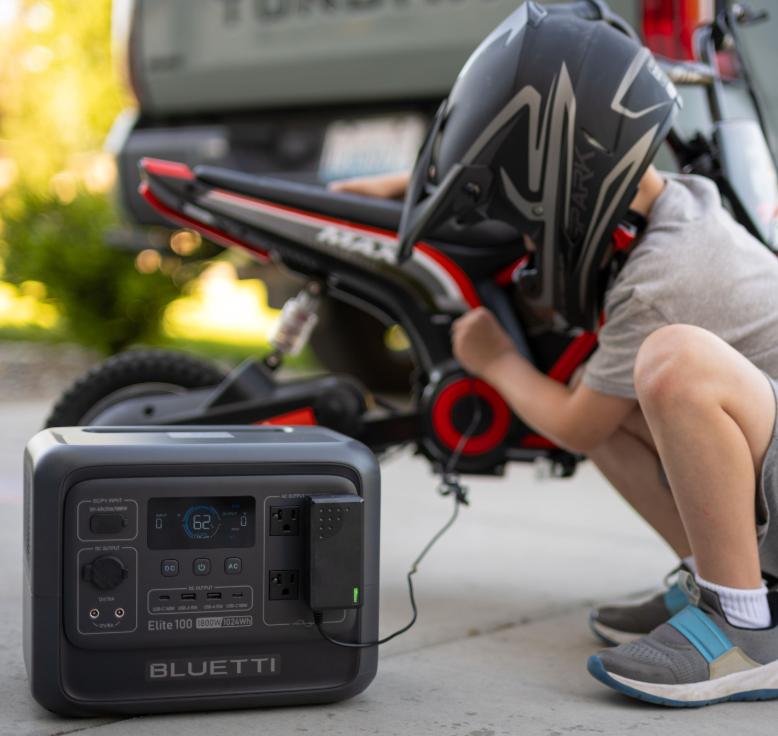
BLUETTI
Elite 100 V2
1,024Wh · 1,800W AC
A straightforward comparison with the DELTA 3 Plus when you want a 1kWh, 1,800W station.
View product & details ↗
EcoFlow
DELTA 3
1,024Wh · 1,800W AC
A mid-size energy reserve for a desk setup or a campsite with a planned recharge.
View product & details ↗DELTA 3 Classic: your questions.
Who is the EcoFlow DELTA 3 Classic for?
A 1kWh option for car-camping loads and short essential-device backup.
How much power and energy does it provide?
The published nominal capacity is 1,024Wh and rated AC output is 1,800W. Usable energy and runtime depend on the load and operating conditions.
What is the main buying trade-off?
The 1,800W output does not make this a larger battery than other 1kWh stations.
Is this a hands-on review?
This is a research-based editorial assessment of manufacturer specifications, with clearly identified planning calculations. PowerMatch has not physically tested this model.
Source and evidence.
Assessment based on the manufacturer’s published US specifications, checked October 19, 2026. Photography is manufacturer-sourced from the manufacturer’s product catalogue.