ALLPOWERS · US STANDALONE MODEL
ALLPOWERS R1500 Lite review
An alternative around the same capacity when your simultaneous AC load fits within 1,600W.
Manufacturer-specification assessment · October 19, 2026

THE POWERMATCH LONG READ
Read the small name, not just the big number.
A closer look at where the ALLPOWERS R1500 Lite fits into everyday life.
The word Lite matters here. This is not the original R1500 with a slightly different label: the researched configuration has 1,056Wh of nominal energy and 1,600W of rated AC output. That puts it close to the familiar 1kWh camping class while giving it a different output ceiling from the 1,800W alternatives.
For devices that fit comfortably inside that ceiling, it is a sensible alternative to examine. The extra 32Wh over a 1,024Wh station should not dominate the decision; it is a small nominal difference, not proof of a substantial runtime advantage. A better question is whether the exact Lite configuration provides the connections, recharge options and practical carrying arrangement you need. Its strongest role is as a considered alternative, with the model identity kept clear from the first comparison to the checkout.
What that energy budget looks like.
For an illustrative combined 80W load, our conservative planning method gives about 8.5 hours between charges. That represents roughly 676Wh at the devices after the method’s allowance for conversion, idle draw and reserve. It is a calculation, not a measured runtime. A different load changes the answer, and an appliance’s maximum label rating is not necessarily its average draw.
A moderate load spread across an evening can be a very different proposition from a high-power cooking appliance used briefly. Make room in the plan for both energy and simultaneous output. The station needs to satisfy each requirement separately; passing one does not compensate for failing the other.
Make the recharge part of the plan.
Before paying for any station, decide where the next reliable charge will come from. A mains outlet at the campsite, a return home after work and an extended outage are three different situations. Solar can be useful, but panel compatibility, weather and placement make it a separate calculation. Do not count a panel’s rated watts as guaranteed daily energy, or assume a panel is included because the retailer uses the words solar generator.
The detail that makes it yours.
Its slightly larger nominal battery is paired with lower rated AC output than the two 1,800W models. Check the exact US model, manual, package contents and current offer together. Then picture it in the place you intend to use it, with the necessary cables connected and ventilation space left clear. That final practical check often tells you more than adding one more model to the shortlist. The best choice is the station whose limits you understand and whose capabilities match the job you actually have.
OUR TAKE
Where it
makes sense.
An alternative around the same capacity when your simultaneous AC load fits within 1,600W.
Its slightly larger nominal battery is paired with lower rated AC output than the two 1,800W models.
The 32Wh nominal difference is small. It is not evidence of a meaningful runtime advantage without comparable usable-energy measurements.
THE STRENGTHS
A useful starting point.
- 1,056Wh nominal battery capacity
- 1,600W rated AC output
- Distinct Lite configuration, not the original R1500
THE TRADE-OFF
Know the limits.
You need 1,800W continuously, or have confused it with the differently specified original R1500.
Nominal capacity is not the same as energy delivered to an appliance. We have not physically tested this station.
What to establish before buying.
Check the current manual for your appliance’s running and startup load, the output ports you need, the station’s weight and ventilation requirements, compatible charging and any additional battery. Confirm the retailer, included accessories, US configuration and warranty.
Power Match compares nominal capacity and rated output against an assumption-based plan. It does not establish fridge startup, medical use or uninterrupted computer operation.
See how much energy you need →Compare the alternatives.

EcoFlow
DELTA 3 Plus
1,024Wh · 1,800W AC
A flexible 1kWh starting point when you want to investigate more charging and expansion options.
View product & details ↗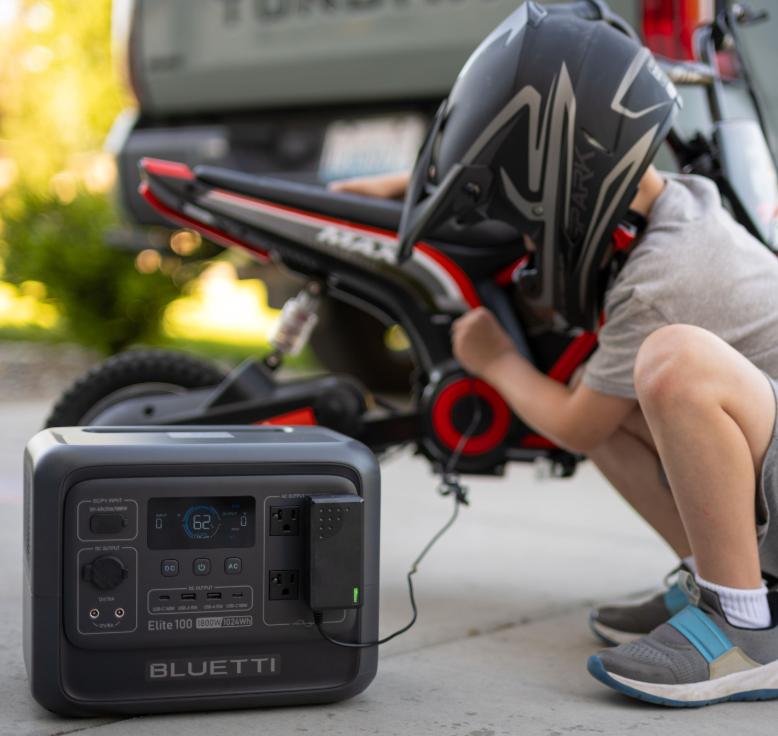
BLUETTI
Elite 100 V2
1,024Wh · 1,800W AC
A straightforward comparison with the DELTA 3 Plus when you want a 1kWh, 1,800W station.
View product & details ↗
EcoFlow
DELTA 3 Classic
1,024Wh · 1,800W AC
A 1kWh option for car-camping loads and short essential-device backup.
View product & details ↗R1500 Lite: your questions.
Who is the ALLPOWERS R1500 Lite for?
An alternative around the same capacity when your simultaneous AC load fits within 1,600W.
How much power and energy does it provide?
The published nominal capacity is 1,056Wh and rated AC output is 1,600W. Usable energy and runtime depend on the load and operating conditions.
What is the main buying trade-off?
Its slightly larger nominal battery is paired with lower rated AC output than the two 1,800W models.
Is this a hands-on review?
This is a research-based editorial assessment of manufacturer specifications, with clearly identified planning calculations. PowerMatch has not physically tested this model.
Source and evidence.
Assessment based on the manufacturer’s published US specifications, checked October 19, 2026. Photography is manufacturer-sourced from the manufacturer’s product catalogue.